
Kids often see money in a simple way. We have enough to buy it. Or we do not. So when they see money in your wallet or watch you use a card, they may wonder: "If we can buy it, why are we saying no?"
That is a fair question. And it opens the door to an important lesson.
Just because we can buy something does not mean we should. Sometimes we choose not to spend because we are saving for something more important. Sometimes we already have enough. Sometimes it is simply not worth our crumbs. That is not about fear. It is about choice.
Affording It Is Only One Part
Being able to pay for something answers one question: "Do we have enough?" It does not answer:
- "Is this worth it?"
- "Does this fit our plan?"
- "What are we giving up if we choose it?"
- "Does something else matter more?"
That is where real money wisdom begins. Money can only do so many jobs at once. When we say no to one thing, we may be protecting a bigger yes somewhere else. That connects to how to decide what something is really worth — a question worth teaching early.
Move From "We Cannot" to "We Choose"
Sometimes the honest answer is: "We cannot afford that right now." That is okay. But many times, what we really mean is: "We could buy it, but we are choosing not to."
That language matters. "We cannot" can make kids think money is only about limits. "We choose" teaches them that families have priorities. You might say:
- "We could buy that, but it is not where we want our crumbs to go today."
- "We are saving for something that matters more."
- "We already planned what our fun money is doing this week."
- "We have enough toys at home, so we are choosing not to bring another one home."
This helps kids understand that saying no is not always about lacking money. Sometimes it is about leading money. And when "no" is handled well, it becomes a lesson — read more on how a thoughtful no can build money wisdom.
Teach Them To Leave Room
Adults often call this margin. For kids, you can simply call it leaving room. We do not spend every crumb just because it is there. We leave room for:
- Future goals
- Unexpected needs
- Family experiences
- Helping others
You might say:
- "We are leaving some crumbs for later."
- "Tomorrow Us may need something too."
- "We are keeping room in our plan."
This teaches kids that unspent money is not wasted money. It gives the family choices later. It also connects naturally to helping kids care about what their money can do later.
Use Everyday Moments
You do not need a formal lesson. The best moments usually happen in real life.
At the Grocery Store
Your child asks for an extra snack. You can say: "We have enough to buy it, but we already chose our treats for this week."
In the Toy Aisle
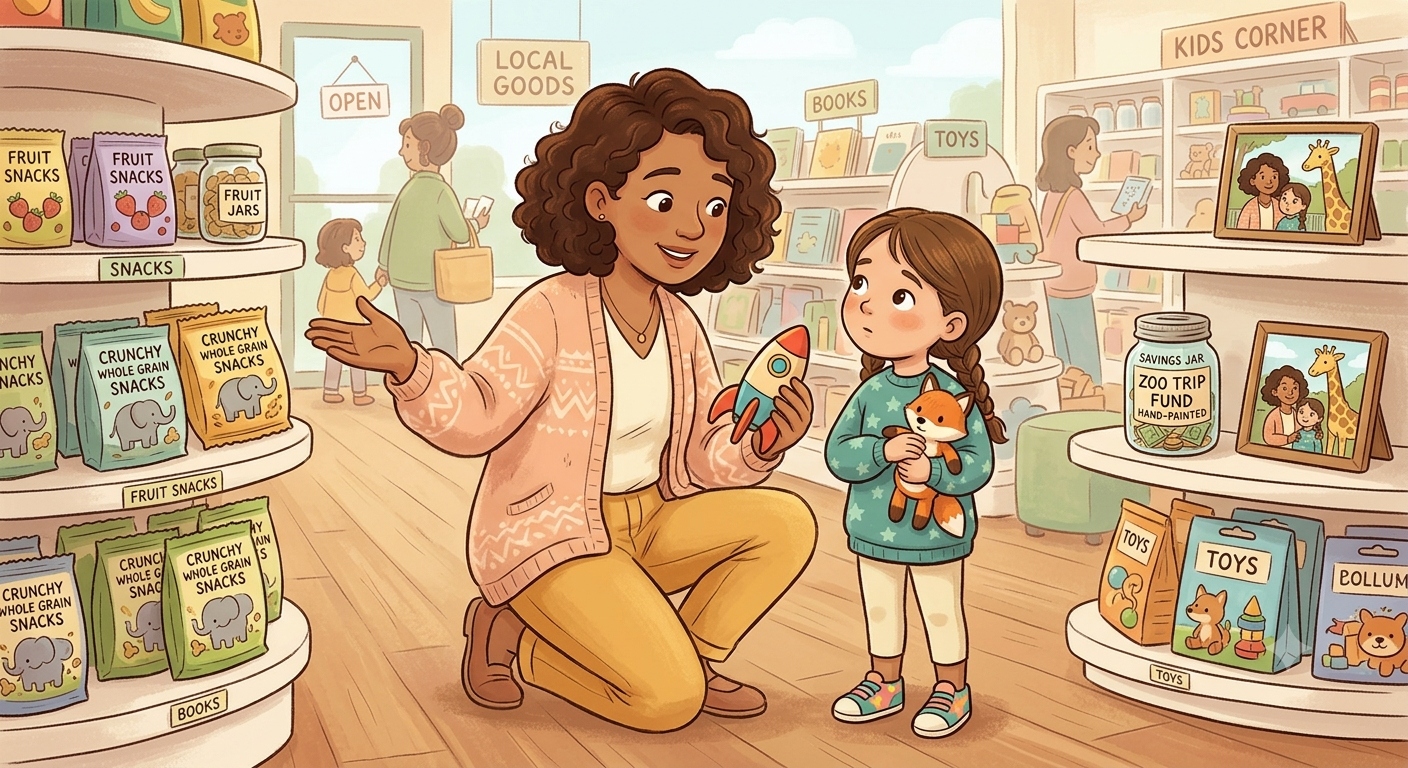
Your child points out that you could buy the toy. You can say: "You are right. We probably could. But we are choosing to save for something you want more."
When Planning Family Fun
Maybe you can afford two outings, but choose one. You can say: "We could do both, but we are choosing one so we still have room for other plans." That teaches that money is not about getting the most. It is about choosing what matters most.
Let Them Think It Through
Instead of making every choice for them, ask simple questions.
- "Would you rather have ice cream today or save for the zoo this weekend?"
- "Is this worth a Sweet choice, or do you want your crumbs to do something else?"
- "What will we have less room for if we buy this?"
These questions help kids understand trade-offs. Choosing one thing often means saying no to another. That is not punishment. That is how priorities work.
Model It Yourself
Kids need to see us practice this too. You might say:
- "I like this, but I do not need to buy it."
- "I could get coffee today, but I would rather save that money for the weekend."
- "This would be fun, but what we already have works."
You are showing them that adults have wants too. We just do not have to follow every one. We can notice it, think about it, then choose. That is also what helping kids enjoy what they already have is really about.
What You Are Really Teaching
When you explain why your family does not buy everything it can afford, you are teaching your child:
- Money should follow what matters most.
- Leaving money unspent creates freedom later.
- Wanting something does not mean we need to own it.
- A thoughtful no can protect a meaningful yes.
The goal is not to make kids afraid to spend. It is to help them spend with intention. Sometimes we buy the treat. Sometimes we enjoy the outing. Sometimes we bring home the toy.
And sometimes we say: "We could buy it, but we are choosing not to." That is not missing out. That is making room.
One choice. One priority. One crumb at a time.