
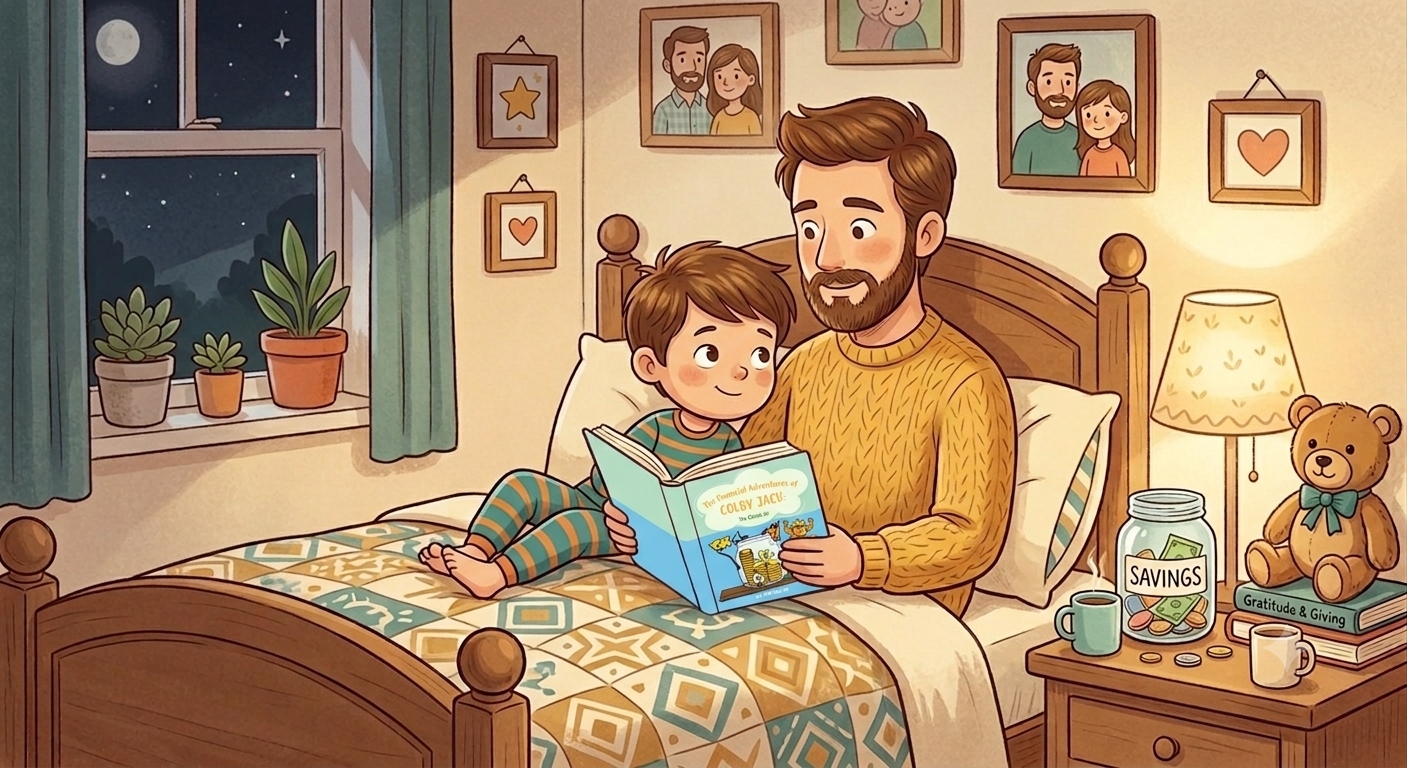
A lot of parents want to teach their kids about money. They just do not want it to feel like one more thing at the end of a long day.
That is why bedtime can be such a gift. It is already a slower moment. The toys are put away. The noise is lower. Your child is close, calm, and listening.
And sometimes one small question before bed can do more than a whole lesson in the middle of the day. That is the beauty of a bedtime money moment. Not a big speech. Not a complicated routine. Just a gentle rhythm that helps your child reflect on saving, spending, sharing, and gratitude while their heart is soft and open.
Why Bedtime Works So Well
Money lessons do not always need action. Sometimes they need reflection. Bedtime is a natural place for that.
Kids are already used to stories at night. They are already winding down. And when the day is over, it is easier to look back and ask simple questions like:
- What felt good today
- What choice did we make
- What are we thankful for
- Did we use our crumbs wisely
That kind of reflection builds more than money awareness. It builds emotional awareness too. And those two things belong together. You can read more about everyday money lessons for young kids to see how these small moments add up.
Keep It Tiny
This part matters. A bedtime money moment should be small enough that you will actually do it. You do not need a fifteen-minute lesson. You do not need to cover saving, spending, and giving every night. You just need one tiny rhythm.
It could be:
- one question
- one short story
- one page from a Colby Jack book
- one moment of gratitude connected to money
That is enough. The goal is not to do a lot. The goal is to repeat something simple often enough that it starts to shape how your child thinks.
One Question Can Be Plenty
Sometimes the easiest bedtime money moment is one simple question. You might ask:
- "What is something you enjoyed today that did not cost money?"
- "Did you make a Smart, Sweet, or Heart choice today?"
- "Was there something you wanted today but chose to wait for?"
- "What is something you are thankful we have?"
- "Did you help someone today with your time, your words, or your crumbs?"
That is it. You are not looking for perfect answers. You are helping your child practice noticing — noticing choices, noticing feelings, noticing blessings. That is where money wisdom starts to feel natural.
Use Stories To Open the Conversation
Stories make hard ideas softer. That is one reason bedtime works so well. If you read one page from a Colby Jack book, or even another story that includes choices, you can use it as a doorway.
You might ask:
- "Was that a Smart choice or a Sweet one?"
- "What do you think Cheddar would have done?"
- "How do you think Mozza felt in that moment?"
- "What would you have chosen if you were Colby?"
Now your child is reflecting without feeling pressure. The story carries the weight. You just help them notice the lesson. That makes bedtime feel safe and easy, not preachy.
Let Gratitude Be Part of It
One of the best ways to end the day well is to help your child notice what is already good. A child who only thinks about what they want tomorrow can go to bed restless. A child who learns to notice what they already have goes to bed fuller. This connects directly to helping kids notice what they already have — one of the most important lessons in the series.
You might say:
- "What is one thing you are glad we had today?"
- "What is something you enjoyed that we already owned?"
- "What is something simple that made today feel special?"
Maybe it was pancakes in the morning, books before bed, a favorite blanket, blocks on the floor, a walk outside, or movie night at home. These little moments teach that joy is not always found in buying something new. That is a powerful lesson to carry into sleep.
A Simple Bedtime Rhythm You Can Try
If you want a structure, keep it very light. Here is one easy rhythm:
- Read One short story, or one page from a Colby Jack book.
- Ask One question about the day, a choice, or a feeling.
- Notice One thing your child is thankful for.
That whole rhythm can take two or three minutes. And because it is small, it can last. That is what you want — not a perfect routine, a repeatable one.
What This Builds Over Time
These tiny bedtime moments may not look dramatic. But over time, they build a lot. They help your child learn to connect money to feelings, reflect instead of react, notice gratitude, remember that choices matter, and end the day with calm instead of more wanting.
And maybe just as important, they help money feel safe. Not rushed. Not tense. Not heavy. Just something your family can talk about with warmth and honesty. For more on the feelings side of this, see helping kids reflect on feelings and money.
One Calm Question at a Time
You do not need to end every day with a perfect money lesson. You just need a tiny moment that helps your child slow down and notice.
One page. One question. One grateful thought before sleep.
That is enough to begin building both emotional literacy and money literacy at the same time. And for a child, that kind of ending can shape a lot more than we realize.
One bedtime. One quiet moment. One crumb at a time.