
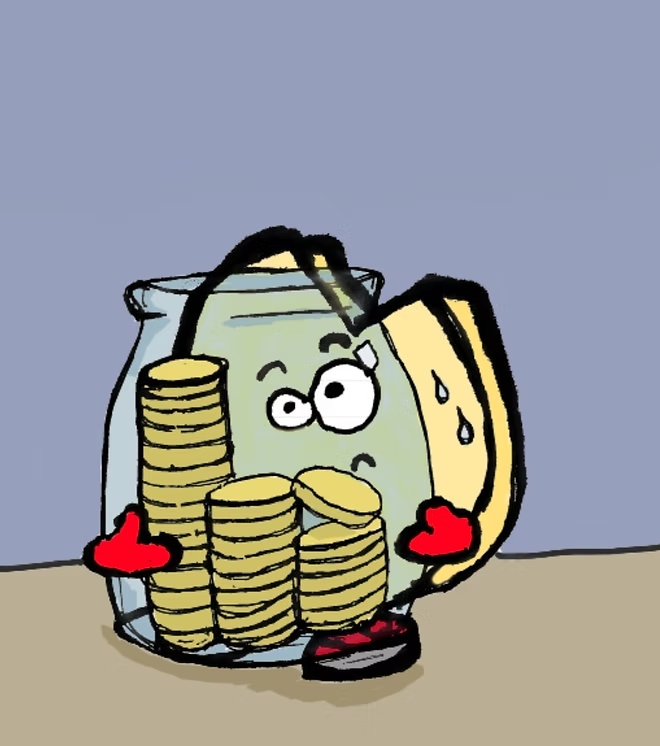
Some kids light up when they get money. Others tighten up. They want to hold every crumb. They do not want to spend it. They worry about running out before they even know what "running out" really means.
If that sounds like your child, you are not doing anything wrong. And neither are they. Some kids are just wired a little more like Mozza. Thoughtful. Careful. Sensitive. Slow to let go.
That can be a strength. But if it goes unchecked, caution can slowly turn into fear. And when fear starts leading the money conversation, kids can begin to believe that money is something unsafe — something to hold tightly, something to worry about, something to avoid using at all.
You are not trying to turn your little Mozza into Cheddar. You are helping them feel safe enough to make wise choices without fear making every decision for them.
What Money Anxiety Can Look Like in Kids
Money anxiety does not always look dramatic. Sometimes it looks quiet. Your child might:
- Worry about spending even a small amount
- Get upset when someone else spends money
- Want to save every crumb and never use it
- Ask over and over if there will be "enough" later
- Feel panicked when a jar gets emptier
- Treat every purchase like a loss instead of a choice
Sometimes parents see this and think, "Well, at least they're a saver." But saving is only healthy when it comes from wisdom, not fear. If your child is saving because they are thoughtful, that is beautiful. If they are saving because they are scared of letting go, that needs gentle care.
Why Some Kids Feel This Way
Kids do not need a spreadsheet to feel money tension. They pick up more than we realize. They hear tone. They notice stress. They watch what makes us tighten up. Sometimes a child becomes cautious because of their natural personality. Sometimes they heard adults talk about bills, debt, or "not enough." Whatever the reason, the goal is not to diagnose every detail. The goal is to help them feel safe.
First, Normalize the Feeling
If your child gets anxious about spending, the first step is not correction — it is comfort. You might say:
- "It makes sense that spending feels hard for you."
- "You like to be careful with your crumbs."
- "Some kids feel excited to spend. Some feel nervous. Both feelings are real."
The moment you name their feeling without judgment, you give them room to breathe. You are showing them that nervousness is something we can talk about — not something they need to hide.
What Not To Say
It can be tempting to say things like "It's just money," "Stop worrying so much," or "Just buy it already." Even if you mean well, those phrases can make a cautious child feel like their fear is silly or wrong. That does not build confidence. It usually builds more shame. They do not need pressure. They need a guide.
Use Gentle Scripts That Build Safety
Once your child feels seen, you can begin offering calm language that gives them security. Try phrases like:
- "Spending some money does not mean all your money is gone."
- "You can use your crumbs a little at a time."
- "Money has different jobs. Some is for later. Some is for now."
- "We can think it through together."
These phrases help your child separate spending from danger. For a nervous child, spending can feel like falling. You are teaching them it can actually feel like choosing.
Start With Very Small, Low-Risk Choices
A fearful child does not need a big "be brave" moment with money. They need tiny wins. Let them choose between spending one crumb now or saving it for later, or using a small amount for Heart, Smart, or Sweet. The goal is not the purchase — it is the experience of making a choice and surviving it. You might say:
- "Would you like to use one crumb today, or keep it for another time?"
- "You get to choose. I can help you think it through."
- "No matter what you choose, you are safe."
Use the Choice Jar to Build Courage
For a nervous child, a full piggy bank can feel safe because everything is together and untouched. But the Choice Jar teaches that money can have a purpose without disappearing into chaos. You might say:
- "Some of your crumbs are staying safe in Smart."
- "Some can be used for Sweet when you are ready."
- "Some can go to Heart and do something kind."
Now spending is not random. It is structured. That structure helps a Mozza-type child feel less overwhelmed.
Celebrate Courage, Not Just Saving
Parents naturally praise saving. But for your little Mozza, you also want to praise courage. Try saying:
- "I'm proud of you for thinking it through."
- "That was brave to use one crumb on purpose."
- "You made a choice and stayed calm."
- "You are learning how to use your money, not just hold it."
This widens the definition of success. Now they are not only the "careful kid." They are becoming the "capable kid." That is a big difference.
Help Them See That Money Can Come Back
One reason nervous kids cling so tightly is because spending feels permanent. You can gently teach that money moves — it comes in, gets saved, gets used, and more can come later. You might say:
- "When you spend one crumb, it does not mean crumbs are gone forever."
- "Money moves. That is part of how it works."
- "You can save again after you spend."
What Progress Actually Looks Like
Progress for a nervous child may not look dramatic. It may look like choosing one small thing without tears, moving a few crumbs into Sweet without panic, or letting go of one crumb and still feeling safe. Do not rush it. Do not compare them to Cheddar. Mozza does not need to become someone else. He just needs enough confidence to use what he has with wisdom.
What You Are Really Teaching
You are teaching your child that fear can be named, that caution can be helpful without taking over, that choices can be made slowly and safely, and that using money does not have to feel dangerous. You are giving them a new story — not "money is scary" but "I can think, I can choose, I can use money without fear leading me."
One Crumb at a Time
If your child is a little Mozza, be gentle. You do not need to push them fast or shame them into bravery. You just keep showing them: money can be talked about, money can be planned for, money can be used with care — and they are safe while they learn. That is how courage grows. One crumb at a time.