
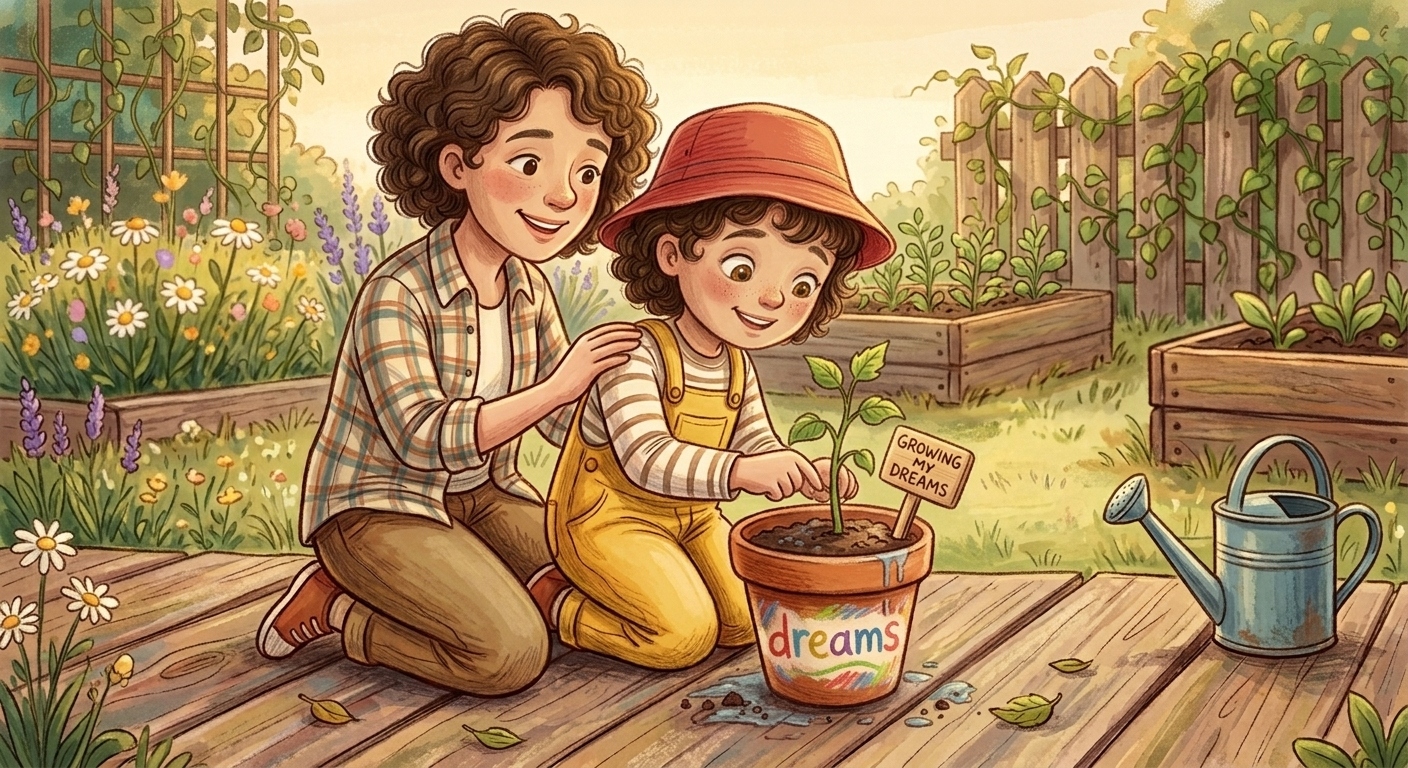
When kids are little, investing does not need to mean stocks, charts, or percentages. It can start with something much simpler.
A seed. You plant it. You give it time. And eventually, it can grow into something bigger than what you started with.
That is the idea we want kids to understand first. Sometimes, when we give something time instead of using it right away, it has the chance to grow.
Start With Something They Can See
Imagine handing a four-year-old a seed and saying: "This tiny seed can become a whole plant." That feels almost magical.
Money growth can feel the same way. You might say: "Some crumbs can be used today, and some crumbs can be given time to grow."
You do not need to explain how an investment account works yet. At this age, you are planting the idea that money does not always have to sit still or disappear when we spend it. Sometimes money can help make more money.
Try a Crumb Garden
Create a simple "crumb garden" at home. Draw a flowerpot on a piece of paper and add a flower each time your child chooses to set aside a crumb. As the flowers grow, talk about what is happening.
- "You started with one."
- "Now look how much your garden has grown."
For very young kids, you can even add an occasional bonus crumb for waiting. The point is not the amount. It is helping kids see how small choices can grow into something bigger — and connecting patience with growth.
Let Waiting Feel Exciting
Kids already understand this idea in other parts of life. A block tower gets taller one block at a time. A plant grows little by little. A puzzle comes together one piece at a time. Money can work that way too.
You might say: "We could use this crumb today, or we could let it stay with the others and see what happens."
Now saving is not only about saying no. It becomes curiosity. What could this turn into later? This connects directly to how patience can help something grow over time.
Follow Their Curiosity
This is where Colby Jack fits naturally. Colby is curious. He asks questions that eventually lead into investing — not because a young child needs to understand the market, but because curiosity helps them see money as something they can use with purpose.
"What could happen if I try this?"
"What could this become?"
"What if I give it more time?"
That idea will become an even bigger part of Colby's journey later in the series. For now, helping kids understand that saved money can have a job is the perfect first step.
Keep the Lesson Small
At three, four, five, or six, you are not trying to create a tiny stock expert. You are helping your child understand one simple idea: money can grow. Sometimes that growth takes patience. And small beginnings can become something bigger over time.
That is plenty for now. The charts can come later. Why early money lessons can start small — one crumb is always enough to begin.
For today, plant the seed. Add a crumb. Give it some time. And let your child wonder what it could grow into.
One seed. One curious question. One crumb at a time.