
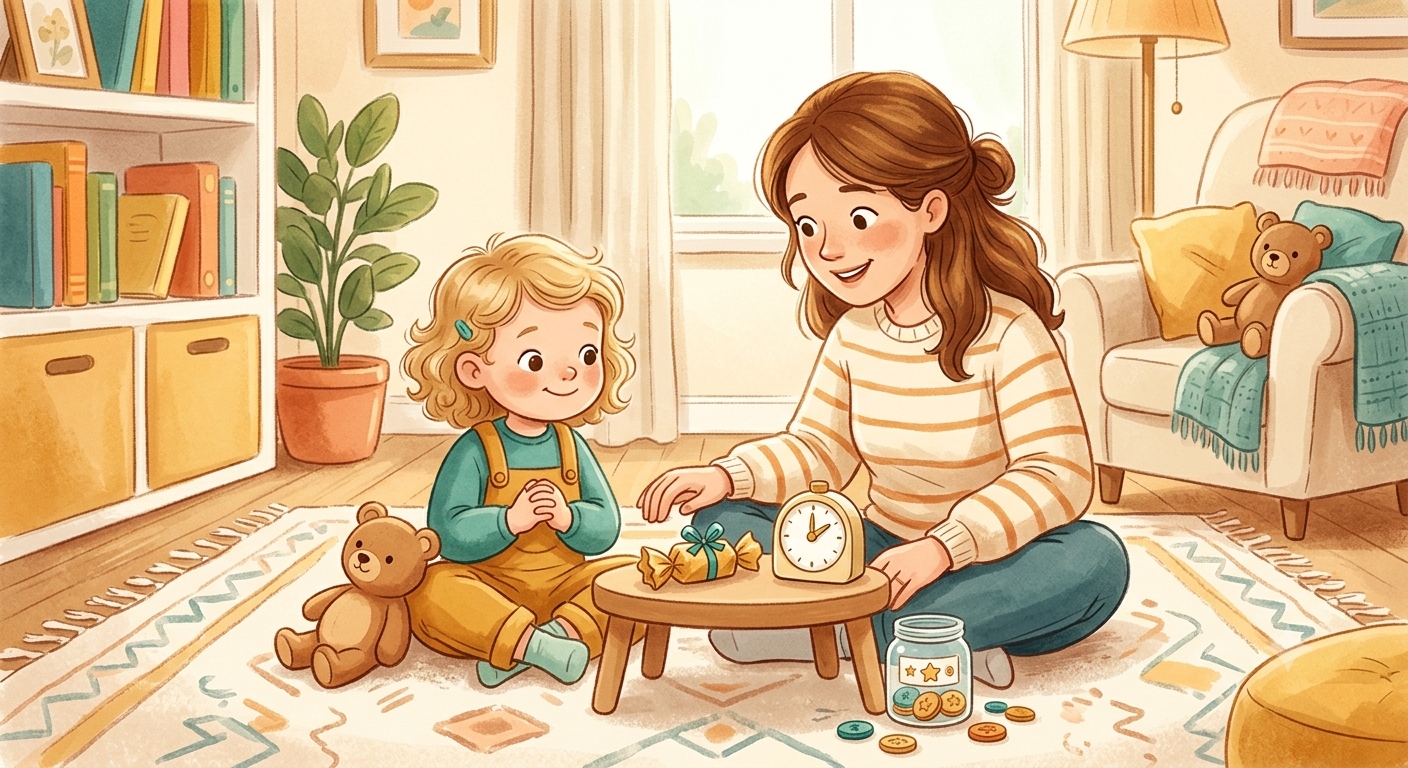
Waiting is hard for little kids. They see the treat. They want the toy. They are ready for the fun thing now. That does not make them spoiled. It makes them little.
Patience is a skill. And like every skill, it grows through practice. That is why "not yet" can be such a helpful phrase. It does not mean never. It means:
- "We are waiting."
- "We have a plan."
- "The good thing is still coming."
“Not Yet” Feels Different
Sometimes a quick "no" can turn into a bigger battle. "Not yet" gives a child something to understand or work toward.
"No, you cannot have the treat."
Try"You can have it after lunch. Not yet."
"We are not buying that toy."
Try"We are not buying it today. You can save your Sweet crumbs for it."
This does not mean every want becomes a yes later. It simply helps kids understand the difference between no, not today, and not yet. And when families choose to wait on purpose, it connects to helping kids understand why families sometimes choose to wait.
Keep the Wait Small
Young kids do not understand time the way adults do. "Next month" can feel like forever. Start with small waits:
- "After we clean up."
- "When the timer rings."
- "After dinner."
- "When you save two more crumbs."
Small waits give kids a chance to succeed. Each time they wait, they learn: "I wanted something. I waited. I was okay." That is how self-control begins. These small moments of practice build lasting habits over time.
Make Waiting Feel Like Progress
Waiting should not feel like a punishment. It can feel like a challenge.
- Set a short timer before opening a treat.
- Draw five circles for a small savings goal and color one in each time your child adds a crumb.
- Use simple "first, then" language.
Try phrases like:
- "First pajamas. Then our story."
- "First we save. Then we choose."
- "First we clean up. Then we play."
Keep your promise whenever possible. Kids learn to wait when they trust what comes next. The savings tracker idea connects directly to turning waiting into progress toward a savings goal.
Name the Feeling
Waiting can feel frustrating. You do not need to talk your child out of that feeling. You can simply say:
- "You really want it right now."
- "It is hard to wait when you are excited."
- "You feel disappointed that we are not getting it today."
Then hold the boundary: "It is okay to feel disappointed. We are still waiting." That teaches an important lesson — feelings are allowed, but feelings do not have to make every choice. For more on helping children understand frustration around money, that article goes deeper on the emotional side.
Notice the Waiting
When your child waits well, point it out.
- "You waited even though it was hard."
- "You kept saving instead of spending your crumbs."
- "You remembered what you were working toward."
The reward may be exciting. But the waiting is where the growth happened.
The Gift of “Not Yet”
The goal is not to make kids wait for everything. Sometimes we enjoy the treat now. Sometimes we choose the toy. Sometimes Sweet spending is exactly the right choice.
But other times, we pause. We save. We finish what needs to be done. We wait for the right moment. Not because joy is being taken away. Because patience is a gift they will carry for life.
One pause. One small wait. One crumb at a time.