
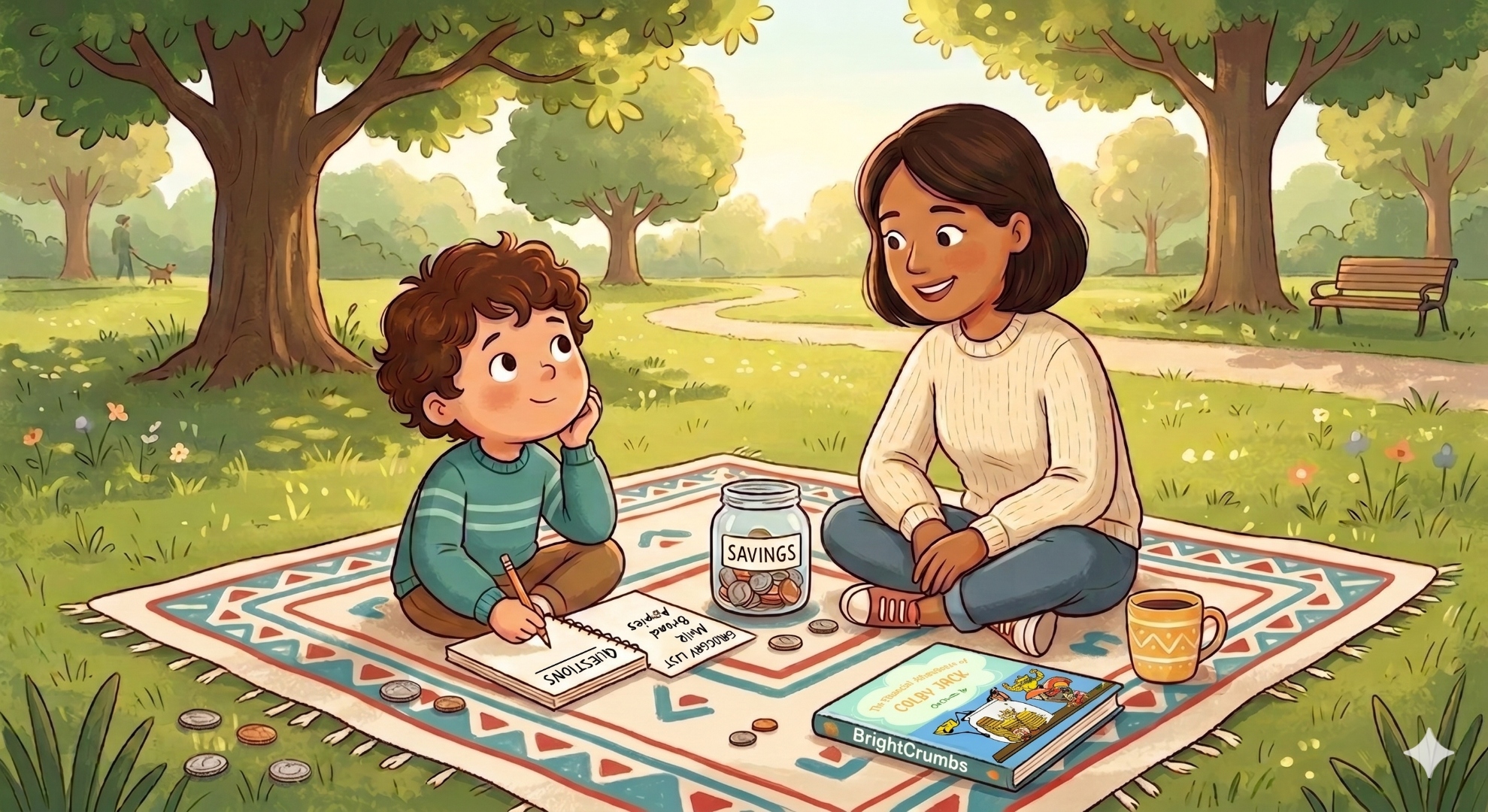
A lot of adults grew up learning one quiet lesson about money.
Do not ask.
Do not ask how much things cost. Do not ask why Mom said no. Do not ask what Dad is worried about. Do not ask if the family has enough.
So instead of learning, they stayed quiet. And that silence followed them. They grew up feeling like money was either too stressful, too private, or too confusing to talk about.
Not because they did something wrong. Because no one made it feel safe to ask.
That is why one of the best gifts you can give your child is not just money lessons. It is permission. Permission to ask. Permission to wonder. Permission to be curious about how money works in your home and in the world around them.
Because kids who feel safe asking questions grow up with language. And language changes everything.
Why Money Questions Matter
When a child asks a money question, they are not being rude. They are trying to make sense of the world. They are noticing that things cost money. That families make choices. That some things are yes and some are no. That grown-ups seem to think about money a lot.
And they want to understand.
That curiosity is a good thing. It means they are awake. It means they are paying attention. It means they trust you enough to ask.
The goal is not to have a perfect answer every time. The goal is to make sure they never feel like money is a forbidden topic.
What Happens When Kids Stop Asking
When kids do not feel safe asking about money, they still form beliefs about it. They just do it silently. They may start to believe:
- Money is scary
- Money causes stress
- Money is something adults hide
- Asking questions about money is wrong
- If I do not understand money, I should pretend I do
That is how silence gets passed down. Not always through one big moment. Usually through a hundred little ones where curiosity got shut down.
That is why we want to do something different. We want to raise kids who feel comfortable saying: "Can we afford this?" "How did you decide that?" "What are we saving for?" "Why are we not buying that today?"
Those are not annoying questions. They are doorways.
Reward Curiosity First
Before you answer the question, start by honoring it. That can be as simple as saying:
- "That is a good question."
- "I'm glad you asked."
- "I like that you are noticing that."
- "That is smart thinking."
These little phrases matter more than they seem. They tell your child: money is something we can talk about. Your questions are welcome here. You do not have to stay quiet.
That is the foundation. Not perfect teaching. Safety.
What Kinds of Money Questions Are Good Questions
Sometimes parents freeze because they are not sure what counts as an okay money question. The truth is, almost any money question can become a healthy conversation if it is handled with calm and age-appropriate language. Some great questions kids might ask:
- "Can we afford this?"
- "Why did you pick that one instead of the other one?"
- "What are we saving for?"
- "Why do we not buy that every time?"
- "How do you decide what to spend money on?"
- "Why does my sister get more?"
- "What does it mean to save?"
- "Why do we give some away?"
These questions show curiosity, not disrespect. They are the beginning of financial confidence.
How To Answer Without Oversharing or Scaring Them
This is where many parents get stuck. They want to be honest. They do not want to dump adult stress on a child either. That is a good instinct. Kids do not need the full spreadsheet. They need simple truth that helps them understand the decision in front of them.
If they ask: "Can we afford this?" you might say: "We could buy it, but we are choosing not to right now." Or: "We are saving our crumbs for something more important." This teaches intention, not fear.
If they ask: "How did you decide?" you might say: "I looked at the price and thought about what we need most." Or: "I wanted to make a Smart choice, not just a fast one." This teaches process, not just the answer.
If they ask: "What are we saving for?" you might say: "We are putting crumbs aside for something bigger later." Or: "Sometimes saving helps us say yes later." This teaches purpose.
You Do Not Need To Answer Everything
It is okay to have limits. There may be moments when your child asks something too big, too personal, or too adult for their age. You do not have to shut them down harshly. You can say:
- "That is a good question, and I want to answer it in a simpler way for now."
- "That is more of a grown-up detail, but I can still tell you the important part."
- "What you need to know is that we are working on it and you are safe."
That keeps the conversation open without making your child carry what they are not ready for.
Simple Ways To Invite More Questions
Some kids ask naturally. Some stay quiet unless they are invited. You can open the door by asking questions of your own:
- "Do you have any questions about why we chose that?"
- "What do you think we are saving for right now?"
- "What did you notice at the store today?"
- "Did anything about money make you curious this week?"
These little prompts make money feel normal, not dramatic. And normal is exactly what we want.
What To Do If You Do Not Know the Answer
Sometimes parents avoid money questions because they are afraid of saying the wrong thing. But one of the healthiest things you can model is this: "I do not know. Let's think about it together." Or: "That is a really good question. I want to give you a thoughtful answer."
That shows your child that money confidence is not about knowing everything instantly. It is about being willing to stay curious and keep learning. That is such an important lesson.
Turning Questions Into Family Language
Over time, repeated questions can become part of your family's money culture. Your child may start asking:
- "Is that a Smart choice or a Sweet one?"
- "Is this part of our plan?"
- "What are we saving for again?"
- "Could this go in Heart?"
That is a beautiful sign. It means they are not just hearing your words. They are beginning to use them. And that is how silence gets replaced — not by one big speech, but by many small, open conversations that teach kids they can speak up and be heard.
What You Are Really Teaching
When you raise a child who asks money questions, you are teaching more than financial literacy. You are teaching:
- Curiosity instead of silence
- Confidence instead of shame
- Language instead of guessing
- Connection instead of secrecy
That changes how they grow up thinking about money. Instead of feeling like money is something mysterious or stressful, they begin to feel: I can ask. I can learn. I can understand. That is a powerful foundation.
One Question at a Time
You do not have to become a money lecturer. You just have to stay open. When your child asks a money question, try not to hear it as pressure. Hear it as trust.
They are giving you a chance to make money feel safer than it felt for a lot of us growing up.
One calm answer. One honest conversation. One "I'm glad you asked" at a time.
That is how you raise a confident question-asker. And that is how kids grow up with language, not silence.