
It does not take long for kids to start noticing what other people have. A bigger toy. A newer bike. A bedroom full of stuff. A birthday party with more presents than theirs.
And little by little, the message around them starts to sound the same. More is better. More is exciting. More means you are winning.
That is the world our kids are growing up in. So if we want to raise children who are grounded, grateful, and not constantly chasing the next thing, we have to teach them something the world usually does not.
Enough.
Not in a heavy way. Not in a guilt-filled way. But in a calm, steady way that helps them enjoy what they have, notice what matters, and feel less pulled by every shiny thing they see.
Because contentment for kids is not something they just "have." It is something we help them practice.
Why This Matters So Much
If a child starts to believe happiness always lives in the next thing, they will never feel settled for long. The new toy feels exciting. Then it becomes normal. Then something else catches their eye.
That cycle can start really early. You see it in toy aisles. In birthday wish lists. In playdates where one child comes home suddenly wanting everything they saw at someone else's house.
The issue is not that kids want things — wanting is normal. The issue is when wanting becomes the center of how they think about joy. That is when we want to gently step in and teach a different way.
Contentment Is Not the Same as "Never Wanting Anything"
This part matters. Teaching kids contentment does not mean your child never asks for anything. It does not mean they stop dreaming, hoping, or enjoying fun things.
It means they are learning how to enjoy what they have without always feeling restless for more. It means they can want something without acting like life is ruined if they do not get it. It means they can say "That looks fun" without feeling like they need it immediately.
That is a very healthy skill.
The Toy Aisle Is One of the Best Classrooms
One of the clearest places kids and comparison comes up is in the store. Your child sees rows of bright, loud, exciting things. Everything feels important for five seconds.
That is where contentment starts becoming practical. Instead of only saying "No, we are not getting that," you can add a little more language. Try phrases like:
- "It is okay to like that without buying it."
- "We do not need to bring everything home for it to be fun to look at."
- "Just because something is exciting does not mean it needs to be ours."
- "We are happy with what we already have today."
These little phrases help kids separate noticing from needing. That is a big step.
Birthdays Can Stir Up the "More" Feeling Too
Birthdays are wonderful. They are also one of the fastest ways comparison can wake up. A child goes to a party and sees bigger gifts, more decorations, more favors, or more excitement than they had at their own. And suddenly the question becomes: "Why didn't I get that?"
This is a great time to bring the conversation back to what really made the day special. You might say:
- "What was your favorite part of the party?"
- "What made it fun besides the presents?"
- "What are some things you loved about your own birthday?"
You are helping your child remember that joy is not only found in quantity. Sometimes it is in the people. The laughter. The cake. The memory. That is how you slowly widen their view.
Playdates Can Wake Up Comparison Fast
A child goes to a friend's house and suddenly sees more toys, a cooler room, a new gadget, a big playset, bins and bins of things they do not have. And then they come home with that look — that mix of wanting, comparing, and feeling a little dissatisfied with their own space.
This is where helping kids feel thankful needs gentle coaching, not shame. You can say:
- "It looked like your friend had some fun things."
- "It makes sense that caught your eye."
- "It is easy to notice what someone else has."
- "What is something you love about what you have here at home?"
You are not pretending they did not notice. You are helping them return to their own life with peace. This connects to what we explored in helping kids handle comparison and money — the same gentle approach works here.
Teach Kids To Notice Blessings on Purpose
Contentment grows when kids learn to notice what is already good. That does not happen automatically in a world built to grab their attention with more. It has to be practiced.
You can make this really simple. At dinner, bedtime, or in the car, ask:
- "What is one thing you enjoyed today?"
- "What is something you are glad we have?"
- "What made today feel good without us buying anything?"
These questions help kids connect joy to things like time together, favorite books, a cozy room, blocks on the floor, a walk outside, a movie night at home. The more they practice noticing blessings, the less they need constant novelty to feel happy.
Contentment Grows Through Small Rituals
Kids do well with repetition. That means family contentment habits are often best taught through small family rhythms, not one big talk. A few simple ideas:
- The "Already Enough" Moment Before going into a store, say: "We already have enough. Today we are just getting what we came for."
- Gratitude at Bedtime Ask: "What is one thing you loved about today that did not cost money?"
- Toy Rotation Put some toys away and bring them back later. This helps old things feel fresh again without buying something new.
- The "Choose What Matters" Phrase When a want pops up, say: "We choose what matters most."
These small rituals help build a home where contentment feels normal. They tie naturally into building a family money motto your kids will carry with them for life.
When Your Child Still Wants More
They will. That part is normal. You are not trying to erase all wanting from your child. You are trying to help them handle wanting with more peace.
When they ask for more, you can stay calm and say:
- "You really want that right now."
- "It is okay to want things."
- "We are still not buying it today."
- "Wanting something does not mean we need to have it."
That is a powerful lesson. You are teaching them that desire does not have to take over the whole moment. They can feel it, name it, and still be okay.
Model It in Your Own Language
Kids learn contentment by watching us too. If they hear adults constantly saying "I need that," "I want a better one," or "This is not enough," they absorb that mindset.
But if they hear "This works well for us," "We are thankful for what we have," or "I'm happy with this," that shapes them too. You do not need to pretend life is perfect. You are simply showing them that enough can feel peaceful.
This is one of the most important everyday money moments you have — the words you use around the house matter more than any formal lesson.
What You Are Really Teaching
When you teach contentment, you are teaching more than gratitude. You are teaching your child:
- how to enjoy what is already in front of them
- how to notice blessings without always needing more
- how to want something without becoming consumed by it
- how to measure joy by more than stuff
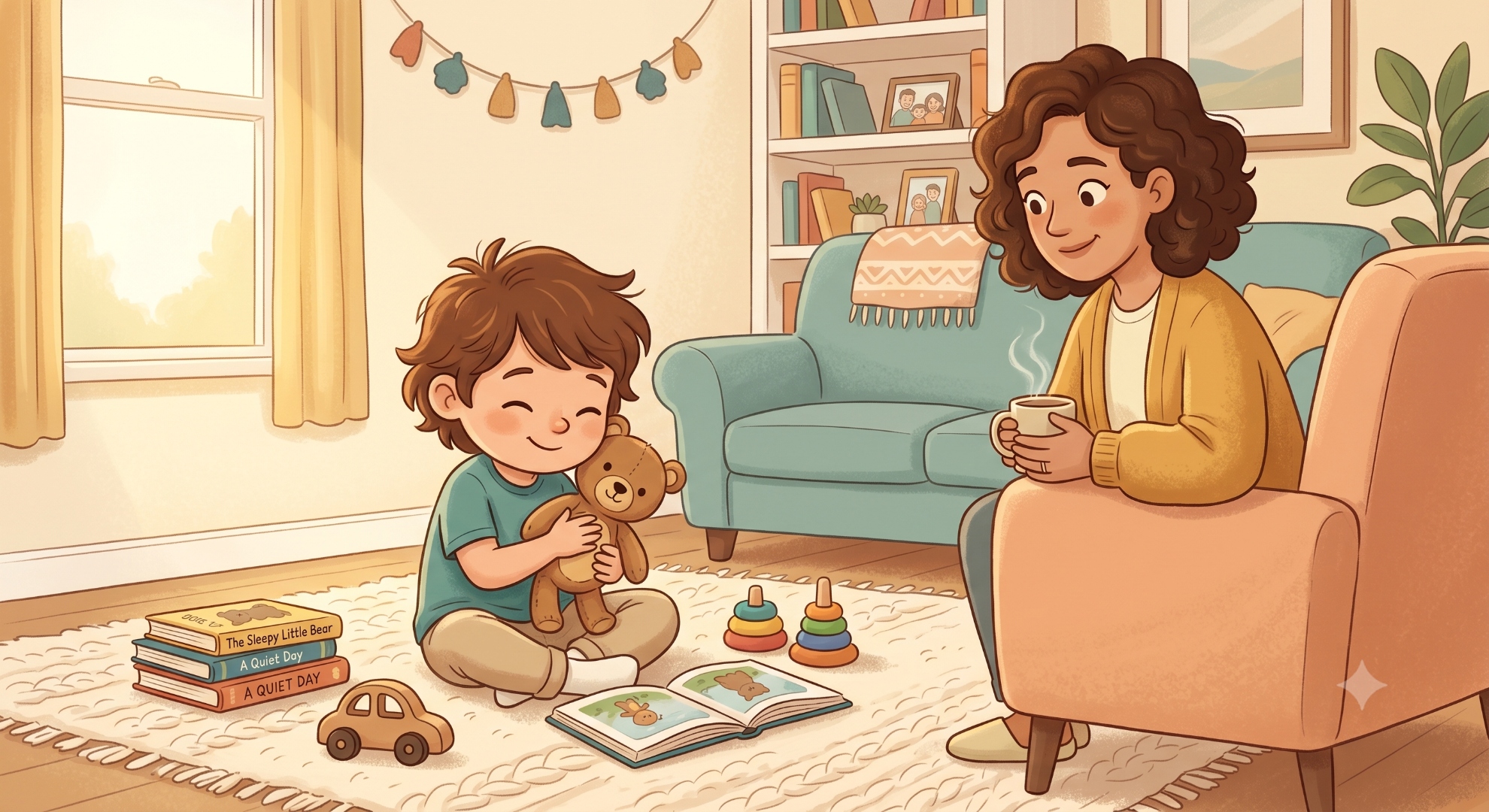
That changes the whole feel of childhood. Now the question is not always "What else can I get?" It becomes "What do I already have that is good?" That is a beautiful shift.
One Small Reminder at a Time
Contentment does not usually arrive in one big lesson. It grows in little moments. In the toy aisle. After the birthday party. On the ride home from a playdate. At bedtime when you ask one simple question.
That is how kids learn that enough is not boring. Enough can actually feel full — full of joy, full of peace, full of what matters most.
One reminder. One ritual. One crumb at a time.