
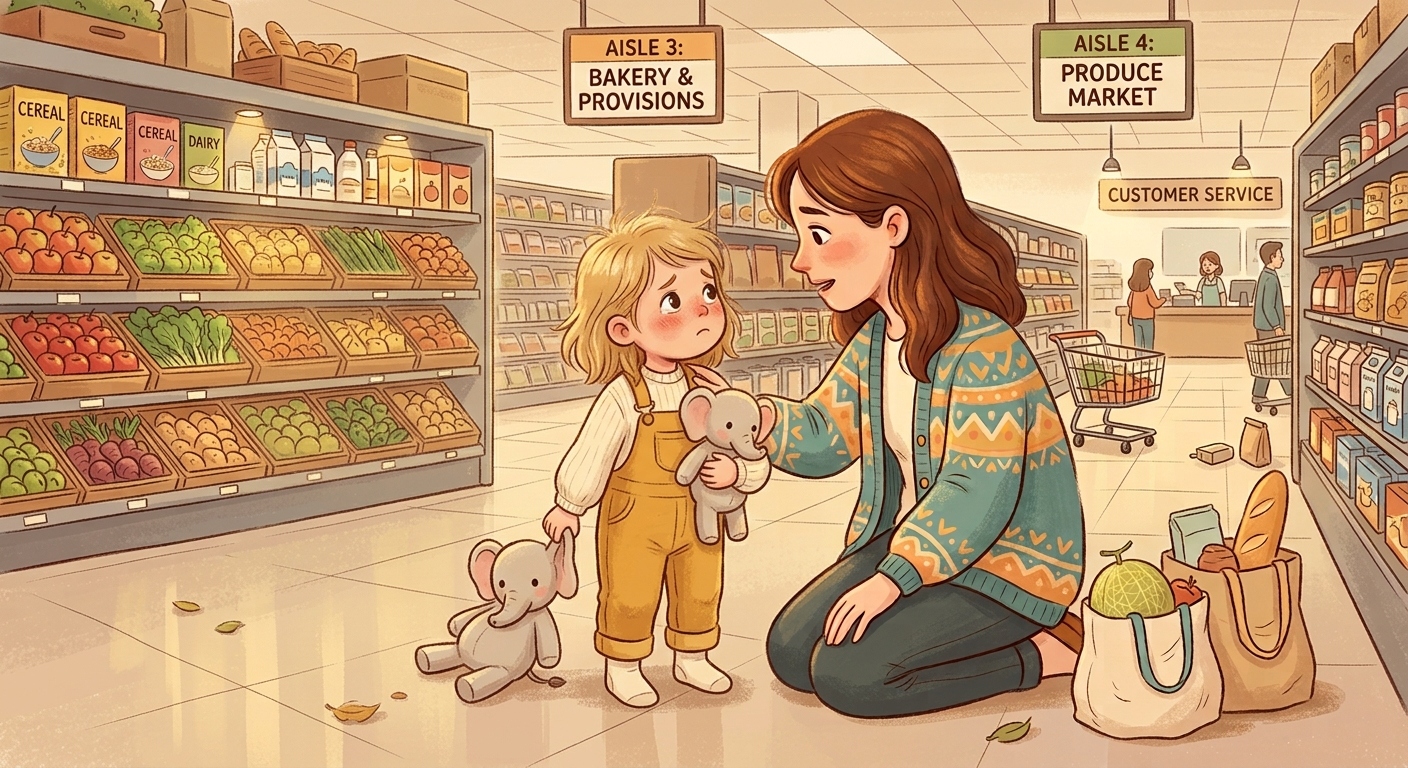
You said no to the toy. They wanted it now. And suddenly you are standing in the middle of the store with tears, yelling, and everyone looking your way.
It happens. Money moments can bring out big feelings in little kids. Especially when the answer is no. And when a meltdown happens, it does not mean the lesson is lost. What matters is what happens next.
Once everyone is calm, that hard moment can become something your child actually learns from.
Start With the Feeling
When your child is overwhelmed, that is probably not the time for a money lesson. They are not ready to hear why the toy costs too much or why you are choosing not to buy it. Start with what they are feeling.
- "You really wanted that toy."
- "You are disappointed we did not get it."
- "It is hard when the answer is no."
You are not changing the decision. You are simply helping them put words to what is happening inside. That can make a big difference. For more on helping kids put words to money feelings, that article goes deeper on the emotional side.
Hold the Boundary
You can understand the feeling without giving in.
- "I know you are upset. We are still not buying the toy today."
- "You can be disappointed. The answer is still no."
That is an important lesson on its own. Your child learns that feelings are okay. But feelings do not have to make the decision. See how to hold a boundary without making money feel scary for more on keeping the relationship warm while the line stays firm.
Come Back To It Later
The best part of the lesson may happen after the moment is over. Maybe that is in the car. Maybe it is at bedtime. Maybe it is the next morning. You can say: "Remember the toy you really wanted today?" Then keep it simple.
- "What were you feeling?"
- "What made it hard to wait?"
- "What could we do next time?"
Maybe you take a picture of the toy and save it for later. Maybe it becomes a Sweet goal. Maybe your child decides they do not want it as much the next day. That is the beauty of slowing the moment down — now they get to think instead of just react. This connects directly to helping kids learn to wait when they want something now.
Try a Simple Reset
You do not need a long speech after a hard moment. Three small steps can be enough.
- Connect "I know that was hard."
- Name "You were really disappointed."
- Revisit "What could we try next time?"
Short. Calm. Easy to repeat.
Parents Need Repair Too
Sometimes the meltdown gets to us too. You are tired. You are embarrassed. You are trying to get through the grocery store. And sometimes you say something you wish you had not. That happens too.
You can come back and say:
- "I was frustrated earlier and I raised my voice. I am sorry."
- "We both had a hard moment. Let's try again."
That does not weaken your authority. It shows your child what repair looks like. And that is a lesson they will use far beyond money. It also connects to showing kids that hard moments can still become learning moments.
The Lesson Is Still There
A hard money moment does not mean you failed. Your child wanted something. They felt disappointed. The boundary stayed. Everyone calmed down. And later, you talked about it. That is still progress.
Some of the best money lessons will not happen in perfect moments. They will happen after the tears. After the frustration. After everyone has had a chance to reset.
One hard moment. One calm conversation. One crumb at a time.